
Outside Taps: Regulations, Freezing Risks, and Maintenance Standards
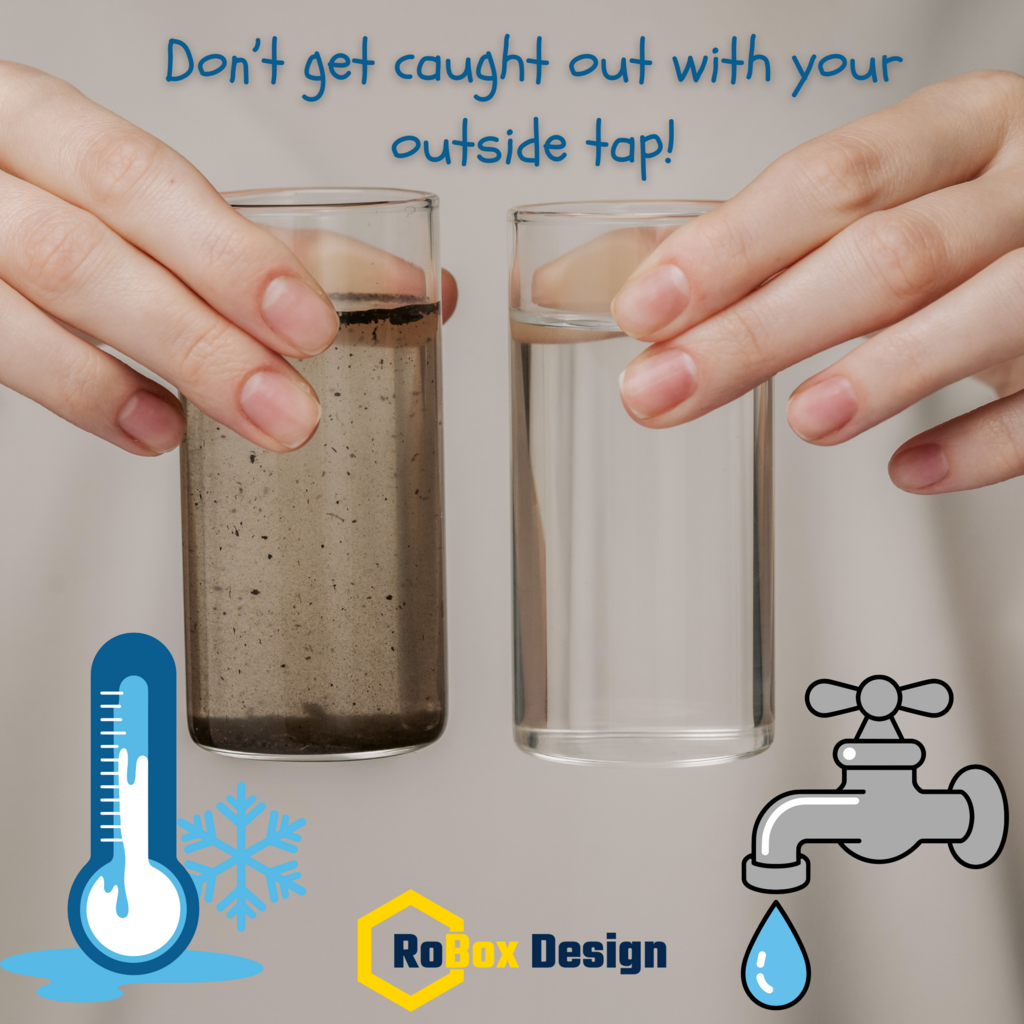
The Essential Guide to Outside Taps: Regulations, Frost Protection, and Safety
In the UK, installing an outside tap is not just a simple DIY improvement; it is a regulated plumbing activity. Whether you are fitting a new point for garden irrigation or upgrading to a hot water dog-wash station, you must comply with strict water laws.
The primary risks are contamination (dirty water flowing back into the drinking supply) and freezing (burst pipes causing flooding). This guide covers the legal requirements, installation standards, and maintenance best practices you need to know.
1. Preventing Frost Damage: Your Legal Duty
Winter is the most critical time for external plumbing. A frozen pipe doesn't just stop water flow; the ice expands and splits the metal. When the thaw comes, water floods the property, often causing thousands of pounds in damage.
The Regulation
Under Schedule 2, Paragraph 11 of the Water Supply (Water Fittings) Regulations 1999, you have a legal duty to ensure that:
"Water systems shall be capable of being drained down and be fitted with an adequate number of servicing valves and drain taps... [and] any water fitting laid below ground level shall have a depth of cover sufficient to prevent water freezing."
Failure to protect your fittings from frost can lead to water waste, potential prosecution, or even disconnection by your water supplier.
2. Installation Standards for Frost Protection
To comply with the law and British Standards, an outside tap installation must meet specific criteria to survive a UK winter.
Insulation (Lagging)
Any pipework exposed to cold air—whether outside the wall, in an unheated garage, or inside a loft—must be insulated.
The Standard:BS 5422 specifies the thickness of insulation required. For standard domestic copper or plastic pipes (15mm-22mm), you generally require high-grade waterproof foam lagging.
Critical Spot: The most common burst point is the elbow joint where the pipe exits the brickwork but before it reaches the tap. This small section of exposed metal freezes rapidly and requires careful attention.
The Isolation Valve (The "Winter Switch")
You must install an internal isolation valve (also known as a stopcock or servicing valve) on the pipe before it passes through the wall to the outside.
Purpose: This allows you to cut the water supply to the garden without turning off the water to the rest of the house.
Location: Ideally located inside a kitchen cupboard or under the sink, clearly labelled for easy access in an emergency.
3. The "Winter Shut-Down" Regime
Water companies like Anglian Water and South Staffs Water report that burst outside taps are a leading cause of leaks. If you do not need to use your outside tap during the winter, follow this simple protection routine:
Isolate: Locate the internal isolation valve (check under your sink) and turn it to the OFF position (usually perpendicular to the pipe).
Drain: Go outside and open the garden tap. Allow the water trapped in the pipework to drain out completely.
Leave Open:Crucial Step—Leave the outside tap in the "open" position for the entire winter. If the valve leaks slightly or residual water freezes, the open tap allows the ice to expand out of the spout rather than splitting the brass body.
Insulate: Fit an insulated tap cover (jacket) over the tap head for extra protection against wind chill.
4. Backflow Prevention & Health Safety
Regulation 4 requires fittings to be suitable for their purpose. For outside taps, the major risk is Backflow—the reversal of water flow that sucks contaminants back into the clean drinking water supply.
Understanding Fluid Risk Categories
To understand the legal requirements, you need to understand the "danger scale" used by regulators, known as Fluid Risk Categories:
Category 1: Safe, clean tap water.
Category 3: Represents a "slight health hazard". This is the standard classification for a domestic garden hose (e.g., water that has been in contact with a paddling pool or garden soil).
Category 5: The most dangerous category, representing serious risks like raw sewage or biological waste.
The Solution: Double Check Valve (DCV)
Because a garden hose is a Fluid Category 3 risk, you must have a Double Check Valve installed on the supply.
Integrated: Most modern outside taps have a check valve built into the brass body (look for "DCV" or a check valve symbol stamped on the metal). Ensure these are insulated, as the internal mechanism can fail if frozen.
Inline: Alternatively, a separate double check valve can be installed on the internal pipework inside the home.
Warning: If you have an unusual garden arrangement (e.g., rainwater harvesting systems or animal troughs), the risk may be higher than Category 3. In these cases, professional advice should be sought.
Hose Safety Tip:WaterSafe advises that you never leave a garden hose connected to the tap in winter. A hose filled with water acts as a "fuse"—it freezes first, and the ice travels up the hose, into the tap, and splits the pipework deep inside the wall.
5. Hot Water Outside Taps
Hot and cold outside taps are becoming increasingly popular for dog washing or filling hot tubs. However, these carry additional regulatory burdens:
Scalding Risk: Water stored at 60°C (to kill Legionella) causes third-degree burns in seconds. It is best practice to fit a Thermostatic Mixing Valve (TMV) internally to blend the water to a safe temperature (approx 48°C) before it reaches the outside tap.
Energy Waste: Uninsulated hot water pipes outside are a breach of energy efficiency standards (Part L of Building Regulations).
Cross-Flow: You generally need a Double Check Valve on both the hot and cold feeds to prevent the higher-pressure cold mains from forcing water back down the hot water pipe.
Frequently Asked Questions
Q: Can I use a "self-cutting" tap kit?A: Professional bodies like Water Regs UK advise against them. They restrict water flow significantly and are more prone to leaking than a properly soldered or compression tee-fitting.
Q: My tap is frozen. How do I thaw it?A:Thames Water advises wrapping the tap in a warm towel and pouring warm (not boiling) water over it. Never use a naked flame or blowtorch, as the rapid expansion can shatter the metal or boil the water inside, causing an explosion.
Sources & Citations
Legislation:The Water Supply (Water Fittings) Regulations 1999, specifically Regulation 4 (Requirements for water fittings) and Schedule 2, Paragraph 11 (Protection against freezing).
Standards:BS 5422:2009 (Method for specifying thermal insulating materials for pipes).
Guidance:
Water Regs UK: "Cold Weather Advice."
Anglian Water: "Winter Warmer Checklist" & "Wrap Up Outside."
South Staffs Water: "Winter Factsheet: Avoiding and handling winter emergencies."
Thames Water: "Winter Advice" (Lagging and Stop Taps).
WaterSafe: "It's Time for Gardeners to Wrap Taps."